A little encouragement might save the world
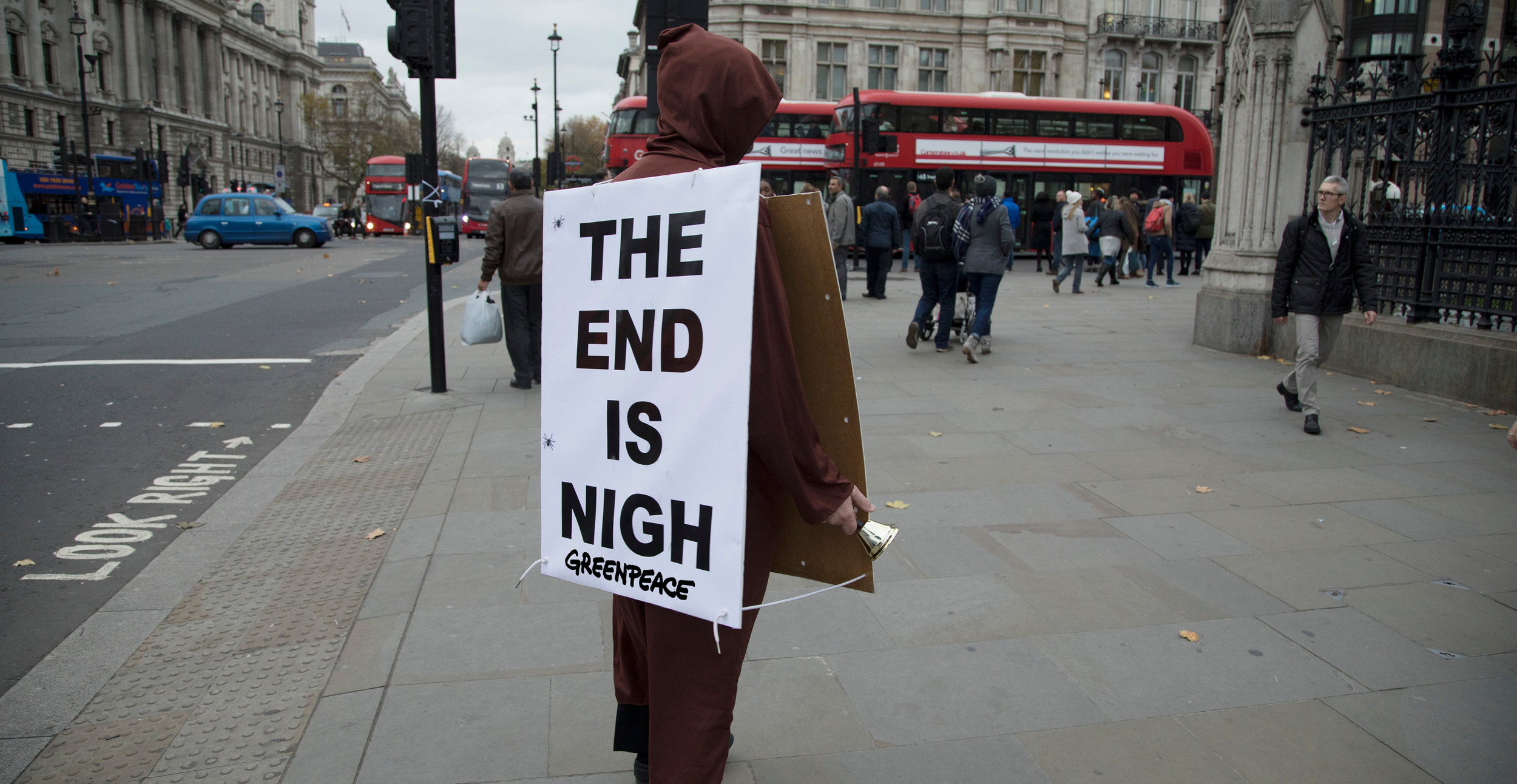
When I was a kid, there was always a man with a collection box at the end of Church Street in Liverpool holding a big sign that read ‘The End Of The World Is Nigh’. I’m not sure anyone ever took any notice.
Instead, we put our loose change into the adjacent collection box for the Alder Hey Children's Hospital, which promised that £20.00 would be enough to get a sick kid back home for Christmas.
The Children’s Hospital collection worked because it gave us shoppers agency. We could give money and go home feeling good because we knew we had made a small difference.
It’s a lesson in communication that a lot of organisations would do well to heed.
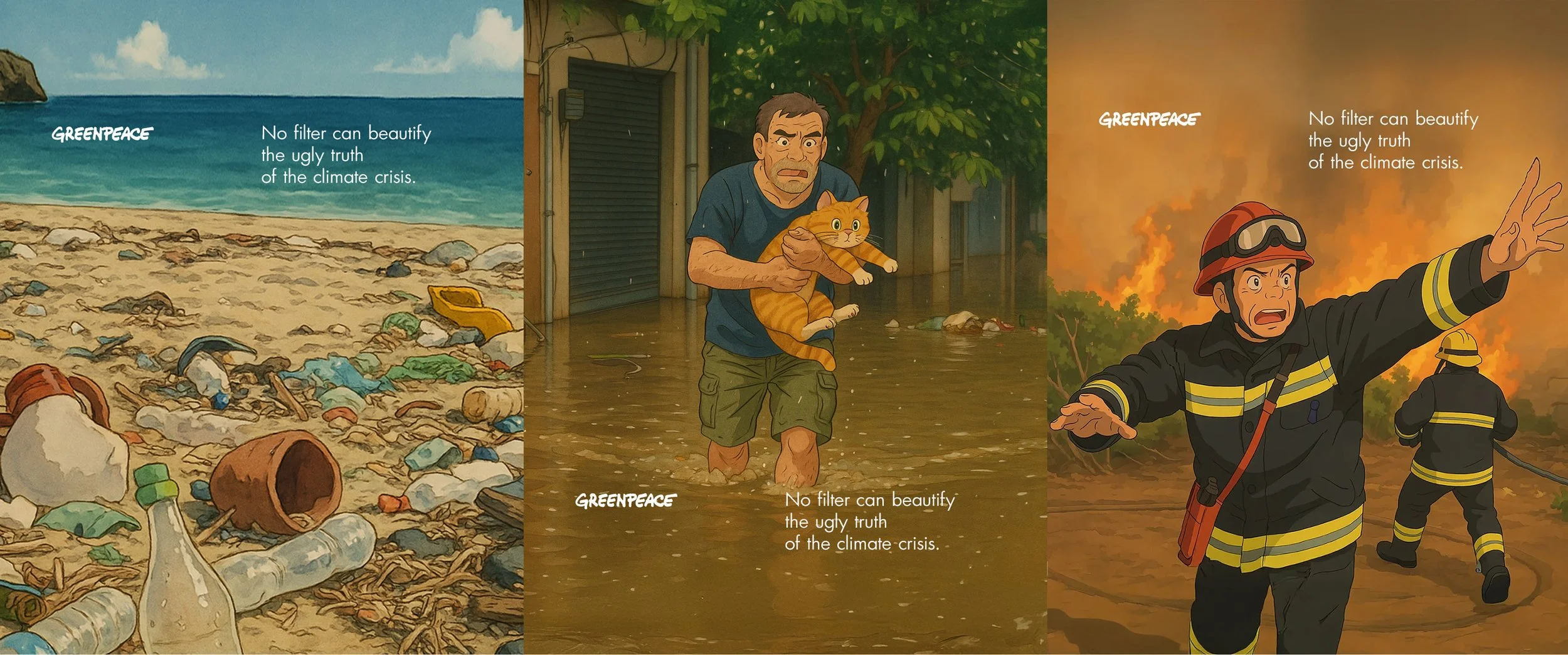
Take, for example, the latest Greenpeace campaign that was all over LinkedIn recently. As a creator, I obviously have a big issue with Greenpeace shamelessly ripping off Studio Ghibli’s IP. But I also take issue with the messaging in the ads.
Any sensible government, organisation or individual already understands that climate change is a real threat. We’ve all (mostly) known it for a long time and have hopefully adapted to limit our impact.
So to me, the challenge for environmental communications isn’t about explaining the issue - WE KNOW! The challenge is to get us to do the things in our power to make a difference: To change our consumption, to change our behaviour.
Headlines like ‘No filter can beautify the ugly truth of the climate crisis’ do nothing to help. Yes, they’re good clickbait - and agencies always love ‘shock and doom’ because it’s great for awards. But has this type of communication ever empowered, encouraged or changed anything? And what am I supposed to do with yet another message about the ‘ugly truth’, other than shrug, feel sad and go about my day?
At some point in the distant future, the Sun will expand enough to swallow the Earth whole, so if you take the very long view, the man with the big sign was right. But simply accepting that we’re all doomed seems a little defeatist. Maybe the world would last longer if we encouraged one another to make a positive difference.
Written by Simon Case
See how Chromatic has helped brands to develop distinctive stories: